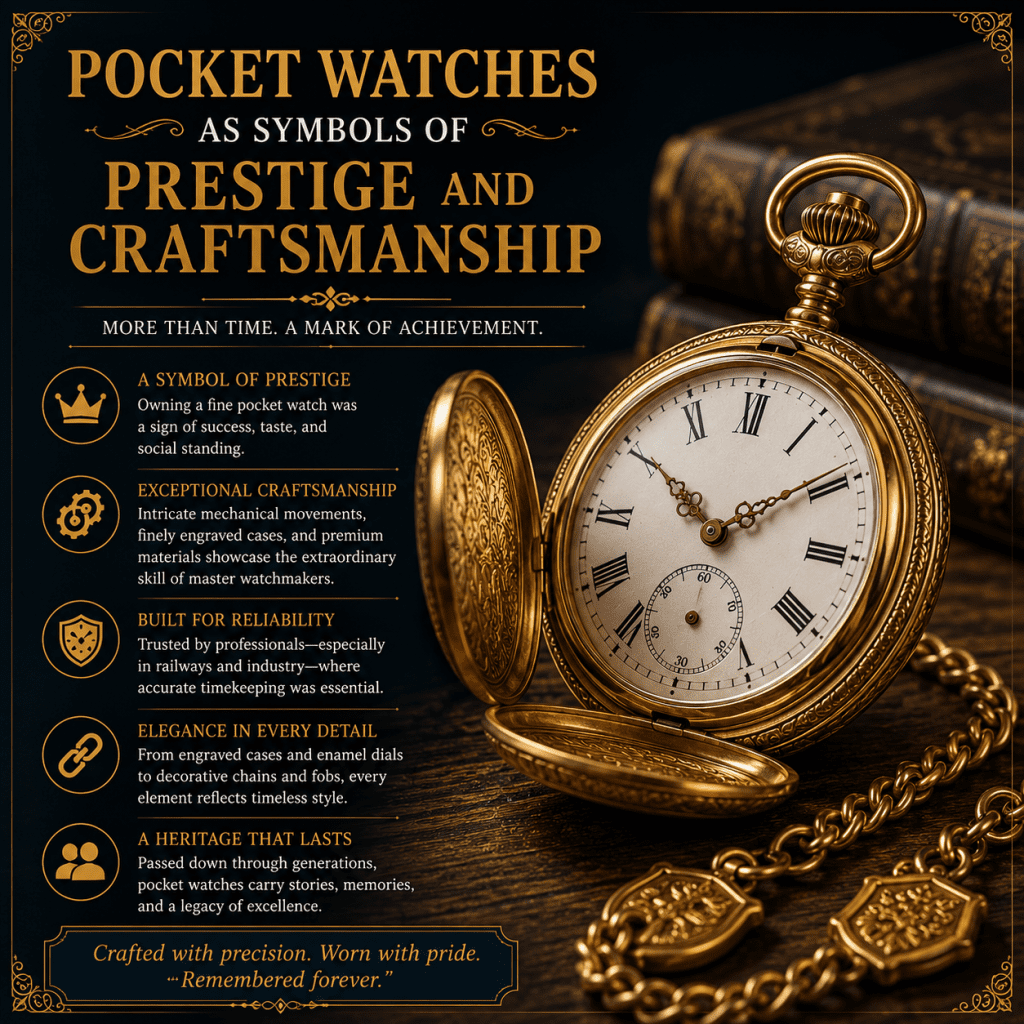
Throughout history, pocket watches have represented far more than simple devices for telling time. They have served as symbols of prestige, achievement, and personal style. For centuries, owning a quality pocket watch was considered a sign of responsibility and success, making these elegant timepieces an important part of social and professional life.
The popularity of pocket watches grew rapidly during the 18th and 19th centuries. Advances in manufacturing techniques allowed skilled craftsmen to produce increasingly accurate and reliable watches. Wealthy individuals often commissioned custom-made pieces featuring gold or silver cases, engraved initials, family crests, or decorative artwork. These personalized watches reflected the owner’s social standing and taste.
Pocket watches were especially important in professional settings. Business leaders, lawyers, doctors, and railway officials relied on accurate timekeeping to manage their daily responsibilities. In the railway industry, precise timing was critical for ensuring train safety. Railway-grade pocket watches were built to strict standards and underwent regular inspections to maintain accuracy. These watches became trusted tools for workers whose duties depended on reliable time measurement.
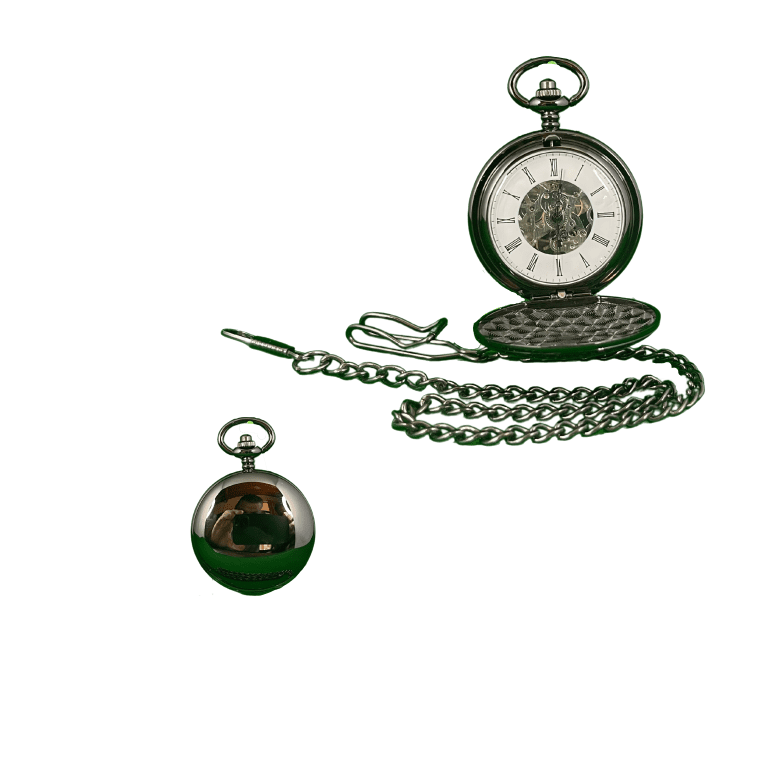
One of the most fascinating aspects of pocket watches is the intricate engineering hidden beneath their cases. Traditional mechanical movements consist of hundreds of miniature components working together. The mainspring stores energy, which is gradually released through a system of gears and an escapement mechanism. The balance wheel regulates this energy, allowing the watch to maintain consistent timekeeping. The precision required to manufacture and assemble these parts demonstrates the remarkable skill of historical watchmakers.
Pocket watch cases were available in various styles and materials. Gold and silver were particularly popular among affluent owners, while brass and nickel cases offered more affordable options. Many cases featured detailed engravings, floral patterns, or artistic motifs. Some watches were decorated with gemstones or enamel artwork, transforming them into miniature masterpieces.
Chains and accessories also played an important role in pocket watch culture. Watch chains, often called fobs, secured the watch to a waistcoat or jacket pocket. Decorative fobs attached to the chain could display personal symbols, organizational memberships, or commemorative designs. These accessories added both functionality and elegance to the overall appearance of the watch.
Collectors today are drawn to pocket watches for many reasons. Some appreciate their historical significance, while others admire their mechanical complexity and craftsmanship. Antique pocket watches often provide a glimpse into the technological advancements and artistic trends of their era. Well-preserved examples from respected manufacturers can command substantial prices at auctions and among private collectors.
The rise of wristwatches during the early 20th century gradually reduced the practical use of pocket watches. Soldiers found wristwatches more convenient during military operations, and the public soon embraced the new fashion trend. Despite this shift, pocket watches retained their status as symbols of tradition and refinement.
Today, pocket watches continue to be worn at formal events, weddings, and historical reenactments. Many people purchase them as gifts to mark significant milestones such as graduations, retirements, or anniversaries. Their timeless elegance and rich heritage ensure that pocket watches remain admired and appreciated in an increasingly digital world.