Have you ever looked at a clock and wondered what makes its hands move so precisely? Behind every clock face is a mechanism designed to measure time and display it in a way we can understand.
Some clocks use traditional mechanical movements with gears, springs and pendulums, while others rely on electronic components and quartz crystals. Although their designs differ, they all have one essential purpose: to keep track of time.
At Timecentre in South Coast Mall, Shelly Beach, we appreciate the craftsmanship and engineering behind clocks, from traditional mechanical designs to modern timekeeping technology.
What Are the Main Parts of a Clock?
The components inside a clock depend on its type, but several important parts are commonly found in traditional mechanical clocks.
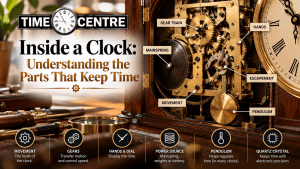
1. The Clock Movement
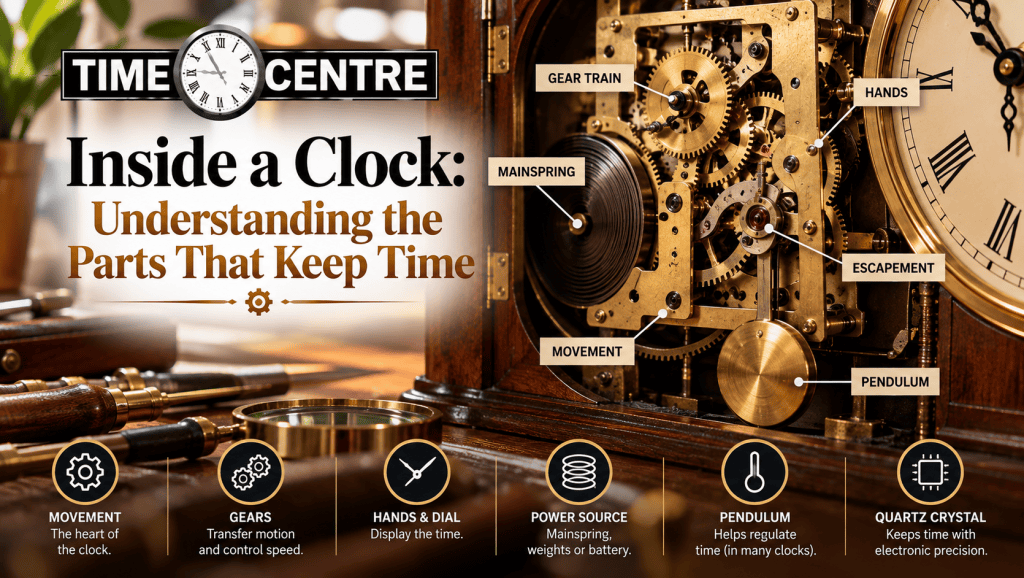
The movement is the mechanism responsible for keeping time and operating the clock’s display.
In a mechanical clock, the movement contains components that regulate energy and transfer it through a series of gears. In a quartz clock, an electronic circuit and a quartz crystal help regulate the timing.
The movement is often considered the heart of the clock because it controls how the time is measured and displayed.
2. Gears and Gear Trains
Gears transfer motion from one part of a clock to another. Their sizes and arrangements determine how quickly different components rotate.
In an analogue clock, the gear train helps move the hands at the correct relative speeds. The minute hand must complete one full rotation every hour, while the hour hand moves much more slowly.
In mechanical clocks, carefully designed gear ratios help coordinate these movements.
3. The Hands and Dial
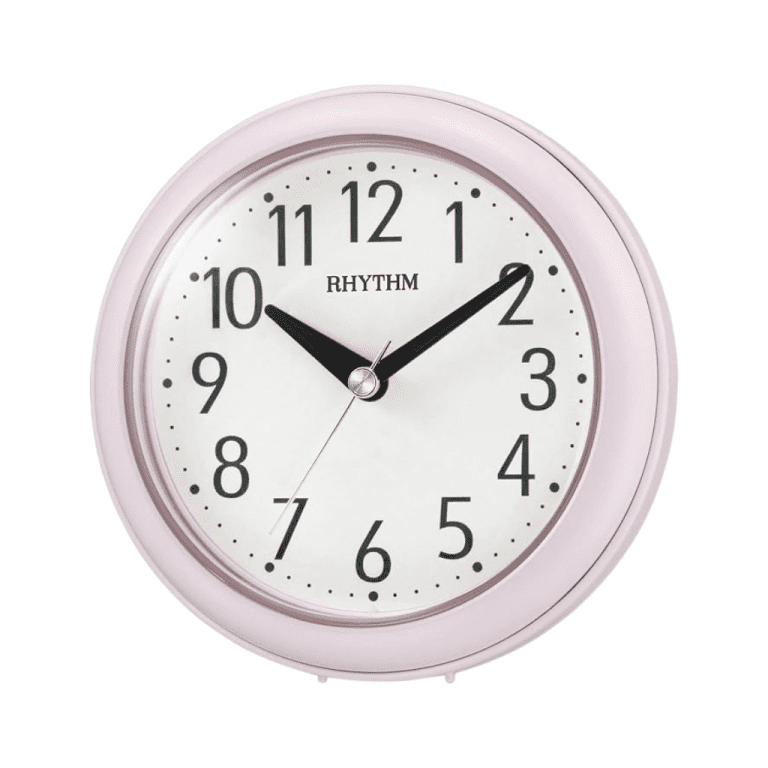
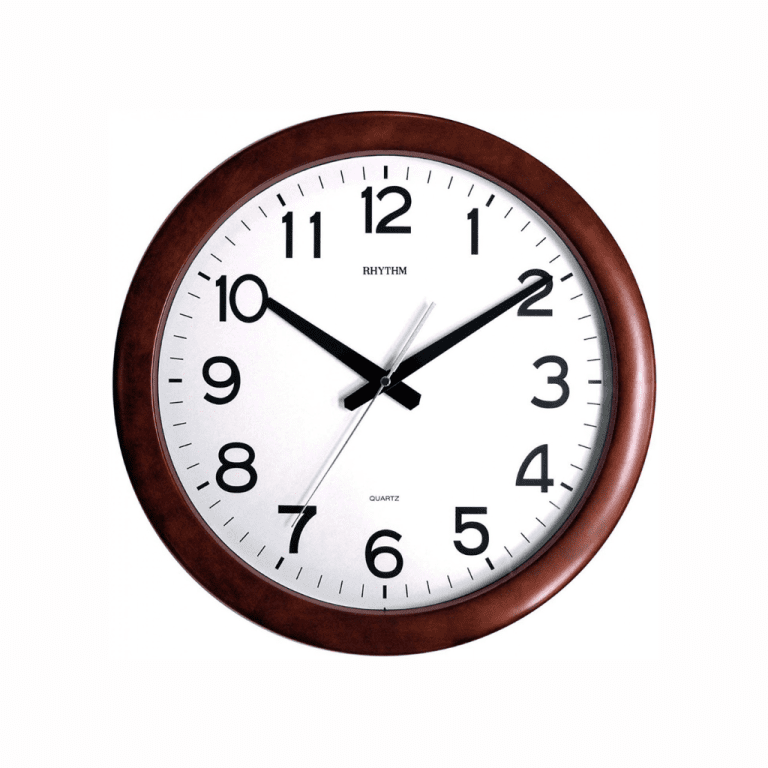
The dial is the face of the clock, where the time is displayed. It may feature Arabic numerals, Roman numerals, simple markers or a minimalist design.
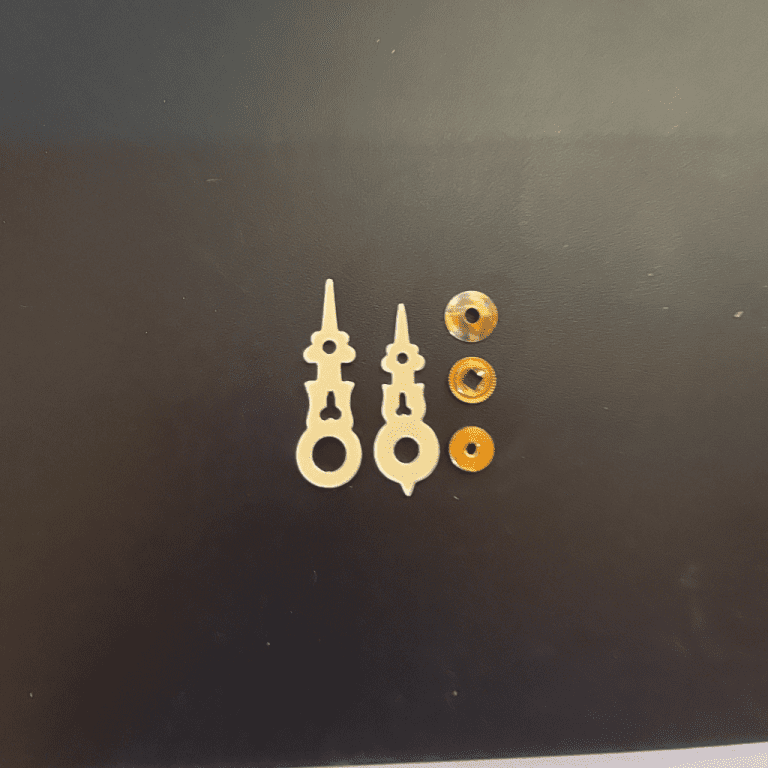
The hands move across the dial to indicate the hours, minutes and sometimes seconds.
Although the dial is the most visible part of an analogue clock, its accuracy depends on the mechanism that drives the hands.
4. The Power Source
Every clock needs energy to operate. The way this energy is supplied depends on the design.
Mechanical clocks commonly use a wound mainspring or suspended weights. The stored energy is gradually released to drive the movement.
Quartz clocks typically use a battery to power an electronic circuit and a small motor that moves the hands.
Some modern clocks use an external power adapter or rechargeable power source instead.
How Does a Mechanical Clock Work?
Mechanical clocks use stored energy, gears and a regulating mechanism to keep time.
In a spring-driven clock, winding the mainspring stores energy. In a weight-driven clock, lifting the weights stores gravitational potential energy.
As the stored energy is released, it drives the gear train. A regulating mechanism controls the release of that energy so the gears do not simply run freely.
Many traditional clocks use an escapement, which releases energy in controlled increments and works with a timekeeping element such as a pendulum or balance wheel.
In a pendulum clock, the pendulum swings back and forth at a rate determined mainly by its length and local gravitational acceleration. The escapement interacts with the pendulum to regulate the movement.
This combination of stored energy, gears and regulation is what allows a traditional mechanical clock to keep time.
How Does a Quartz Clock Work?
Quartz clocks use a different approach.
A battery supplies electrical energy to an electronic circuit. The circuit excites a quartz crystal, which vibrates at a very stable frequency. The electronics use these vibrations as a timing reference and convert them into signals that operate the display.
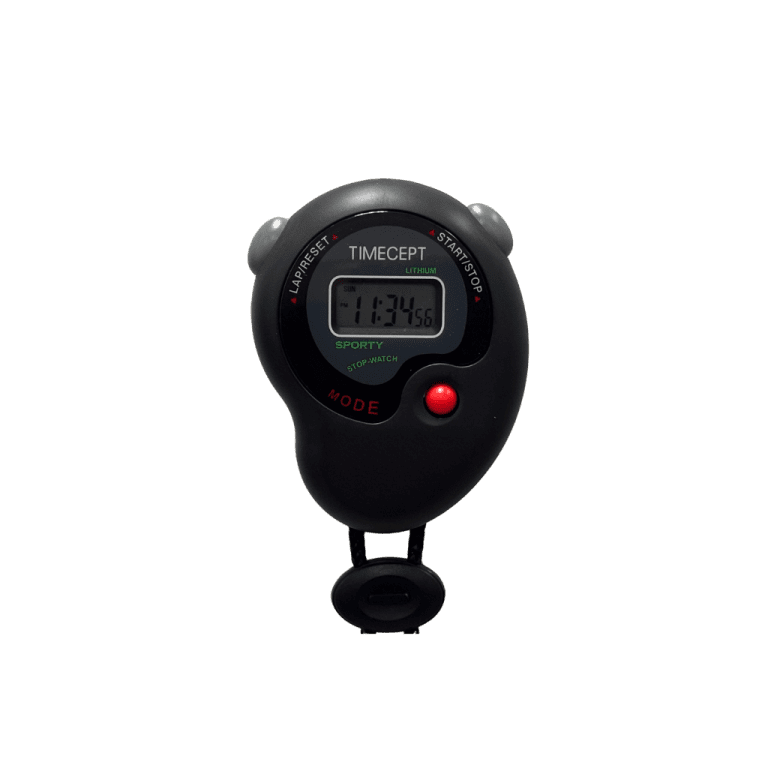
In a typical analogue quartz clock, a small motor advances the hands through the gear train. In a digital clock, the timing signals are used to update the numbers on the display.
Quartz technology became popular because it allows clocks to offer convenient, consistent timekeeping without the regular winding required by many mechanical models.
What Is the Difference Between a Pendulum and an Escapement?
These two components are often associated with traditional clocks, but they perform different roles.
A pendulum is a swinging weight that provides a regular motion used to regulate time in many traditional clocks.
An escapement is a mechanism that controls how energy passes from the clock’s power source to its gear train, typically interacting with the regulating element.
They work together in many pendulum clocks, but not every clock has a pendulum. Other mechanical designs may use a balance wheel, while quartz clocks use electronic timekeeping instead.
Understanding this distinction helps explain why different types of clocks can operate in very different ways.
Why Do Clocks Sometimes Lose or Gain Time?
Even a well-made clock can become inaccurate for several reasons.
Mechanical clocks may be affected by changes in temperature, friction, wear, incorrect positioning or problems with the movement. A pendulum clock that is not properly adjusted may also gain or lose time.
Quartz clocks can experience problems related to low batteries, damaged components or electronic faults.
If a clock begins stopping repeatedly, making unusual sounds or keeping noticeably incorrect time, check the manufacturer’s guidance first. A qualified clock repair specialist can assess more complicated problems.
Avoid opening or adjusting delicate internal components unless you have the appropriate skills.
Why Clock Craftsmanship Still Matters
Clocks combine practical engineering with design and craftsmanship. A traditional mechanical clock can showcase intricate gears and moving parts, while a modern quartz clock demonstrates how electronics can make everyday timekeeping convenient.
Whether you prefer the movement of a pendulum, the chime of a traditional clock or the simplicity of a modern design, understanding what happens inside a clock can deepen your appreciation for the object itself.
Explore Clocks and Timekeeping at Timecentre
Every clock tells a story about the technology and craftsmanship used to measure time. From mechanical movements to quartz mechanisms, the components inside a clock work together to turn an invisible process into something we can see and understand.
Visit Timecentre at South Coast Mall, Shelly Beach, on the KwaZulu-Natal South Coast, to explore our range of clocks and timepieces. Our team can help you discover different styles and learn more about the features that make each type unique.