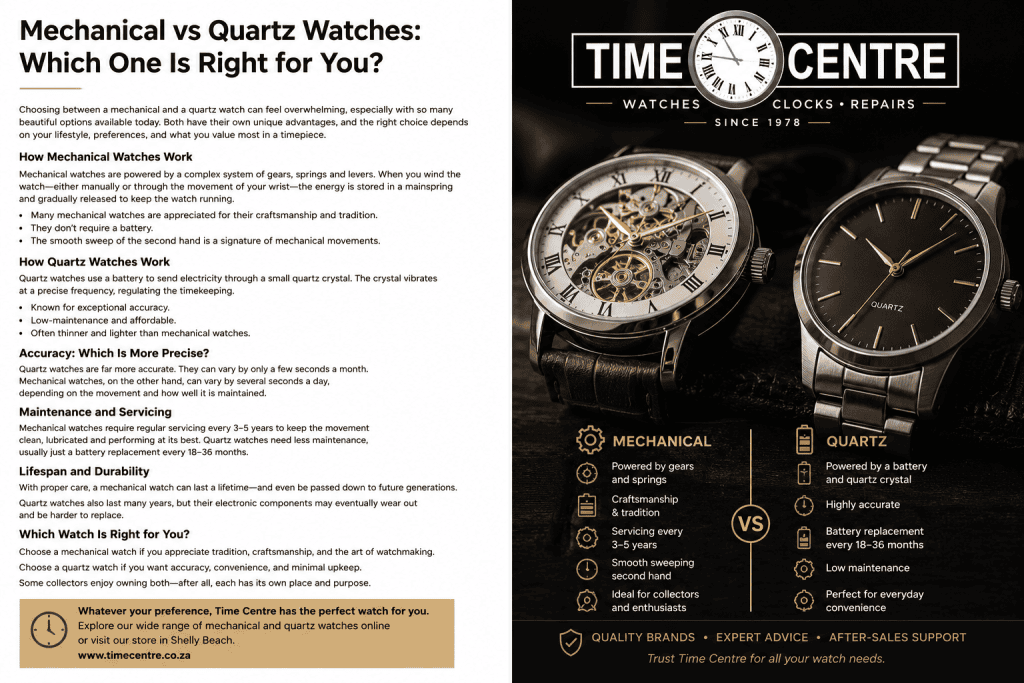
Buying a watch is about more than simply telling the time. A quality timepiece reflects your personality, complements your style, and can even become a treasured heirloom. One of the biggest decisions when choosing a watch is whether to buy a mechanical or quartz model.
Both types have earned loyal followings over the years, and each offers unique advantages. Understanding how they work and what makes them different will help you make the right choice for your lifestyle.
How Mechanical Watches Work
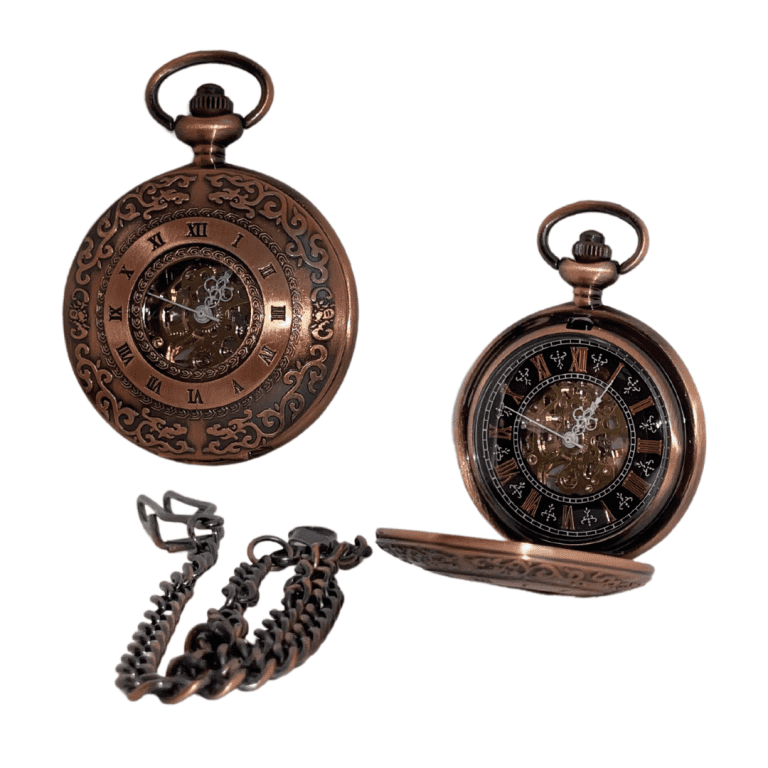
Mechanical watches are powered by a complex arrangement of springs, gears and precision-engineered components. Rather than using a battery, they store energy in a mainspring, which gradually releases power to keep the watch running.
There are two main types of mechanical watches:
- Manual watches, which require regular winding by hand.
- Automatic watches, which wind themselves using the natural movement of your wrist.
Many watch enthusiasts appreciate mechanical watches for their craftsmanship and the incredible engineering involved in every movement. Watching the smooth sweep of the second hand is often part of their charm.
How Quartz Watches Work
Quartz watches operate differently. Instead of springs and gears providing power, they use a small battery that sends electricity through a quartz crystal. The crystal vibrates at a consistent frequency, allowing the movement to keep highly accurate time.
Quartz technology revolutionised the watch industry because it made reliable timekeeping more affordable and accessible.
Quartz watches are known for:
- Excellent accuracy
- Low maintenance
- Slimmer case designs
- Affordable servicing
For people who simply want dependable everyday performance, quartz watches are often an excellent choice.
Which Is More Accurate?
If accuracy is your top priority, quartz watches have the advantage.
A typical quartz watch may only gain or lose a few seconds each month, while mechanical watches naturally vary by a few seconds each day depending on their movement and condition.
That doesn’t make mechanical watches inferior—it simply reflects the traditional engineering that many collectors admire.
Maintenance Requirements
Mechanical watches require regular servicing to keep hundreds of tiny components working together smoothly. Most manufacturers recommend servicing every three to five years.
Quartz watches require less maintenance, but they still need periodic battery replacements, seal inspections and occasional servicing to ensure long-term reliability.
Regardless of the movement, professional maintenance helps protect your investment.
Durability and Longevity
With proper care, both types of watches can provide many years of reliable service.
Mechanical watches are often passed down through generations because their movements can usually be repaired and restored. Many luxury brands continue servicing watches that are decades old.
Quartz watches are extremely durable for everyday wear, making them ideal for busy professionals, students and active lifestyles.
Which Watch Is Right for You?
Your decision ultimately depends on what you value most.
Choose a mechanical watch if you appreciate traditional craftsmanship, intricate engineering and timeless design.
Choose a quartz watch if you want outstanding accuracy, convenience and minimal maintenance.
Many collectors eventually own both, enjoying each for different occasions.
Find Your Perfect Watch at Time Centre
Whether you’re looking for a sophisticated automatic timepiece, a reliable quartz watch, or expert advice on choosing your next watch, Time Centre offers a wide range of quality brands to suit every taste and budget.
With experienced staff, professional after-sales support and expert watch servicing, Time Centre is committed to helping you find a watch you’ll enjoy for years to come.
Visit Time Centre in Shelly Beach or browse our collection online at www.timecentre.co.za to discover the perfect watch for your lifestyle.