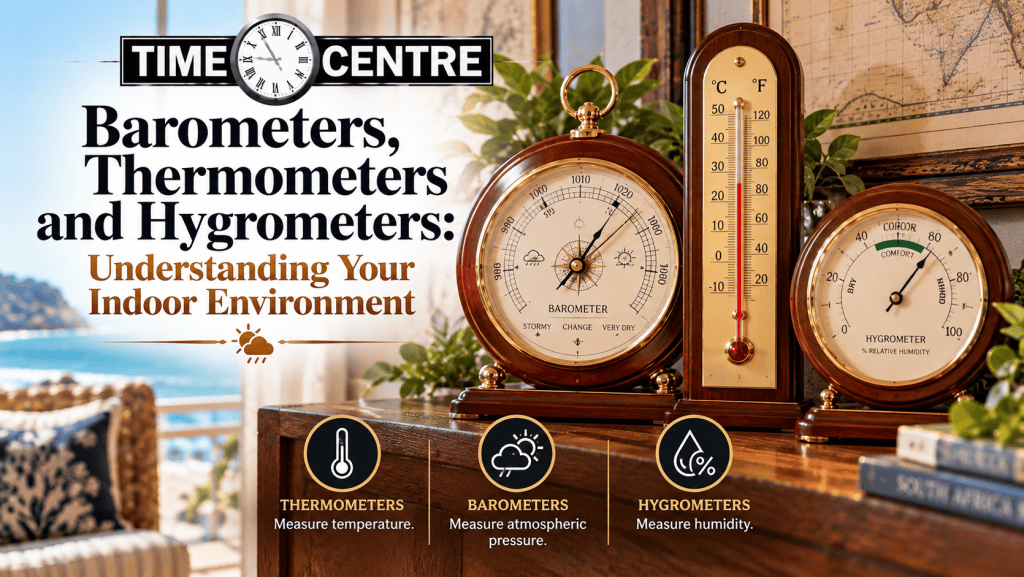
Have you ever wondered why the air in your home sometimes feels damp, why temperatures change throughout the day or how changes in atmospheric pressure relate to the weather? Barometers, thermometers and hygrometers are instruments that help us understand different aspects of our environment.
Although they may look similar, each instrument measures something different. Some are designed for everyday household use, while others are valued for their traditional craftsmanship, scientific purpose or decorative appeal.
At Timecentre in South Coast Mall, Shelly Beach, you can explore clocks and weather-related instruments that combine practical information with timeless design.
What Is a Thermometer?
A thermometer measures temperature. Depending on the type, it may display the temperature of the air, a liquid or another material.
For the home, indoor and outdoor thermometers can help you understand temperature differences between rooms and outside spaces.
How Can a Thermometer Help at Home?
A thermometer can be useful when planning your day, monitoring indoor conditions or checking how temperatures change between morning and evening.
Outdoor thermometers are particularly helpful for people who enjoy gardening or spending time outside. Indoor models provide a convenient way to check the temperature of your living space.
Thermometers are available in several forms, including traditional analogue designs and modern digital models. When choosing one, consider whether you need indoor readings, outdoor readings or both.
What Is a Barometer?
A barometer measures atmospheric pressure — the pressure exerted by the air surrounding us.
Changes in atmospheric pressure can provide clues about changing weather conditions. Falling pressure is often associated with unsettled weather systems, while rising pressure may accompany improving conditions.
However, atmospheric pressure is only one part of weather forecasting. A barometer cannot guarantee whether rain, sunshine or strong winds will occur.
Why Are Barometers Interesting?
Barometers have a long history in meteorology and navigation. Before modern digital forecasting became widely available, people used barometers to observe pressure changes and help interpret possible weather patterns.
Traditional barometers can also be attractive decorative objects. Depending on the model, they may feature a round dial, a wooden case, a metal finish or other classic details.
For someone who enjoys weather observation or traditional instruments, a barometer can be both practical and visually appealing.
What Is a Hygrometer?
A hygrometer measures humidity, usually expressed as relative humidity. Relative humidity describes how much water vapour is present in the air compared with the maximum amount the air could hold at that temperature.
Humidity can affect how comfortable a room feels. High humidity may make warm conditions feel more uncomfortable, while very dry air can cause discomfort for some people.
Why Monitor Indoor Humidity?
A hygrometer can help you understand whether your indoor environment is particularly humid or dry.
This can be useful in bedrooms, living rooms, storage areas and other spaces where environmental conditions matter. For example, monitoring humidity may help you identify conditions that warrant better ventilation or further investigation.
Humidity readings are also useful when caring for certain wooden objects, musical instruments and collections that may be sensitive to changes in moisture levels.
A hygrometer measures conditions; it does not automatically correct them. The appropriate response depends on the readings, the room and the items being stored.
What Is the Difference Between These Three Instruments?
Although all three instruments provide information about the environment, each has a different purpose.
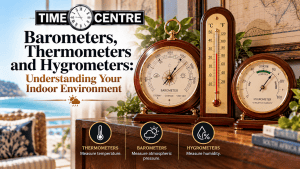
- Thermometer: Measures temperature.
- Barometer: Measures atmospheric pressure.
- Hygrometer: Measures humidity.
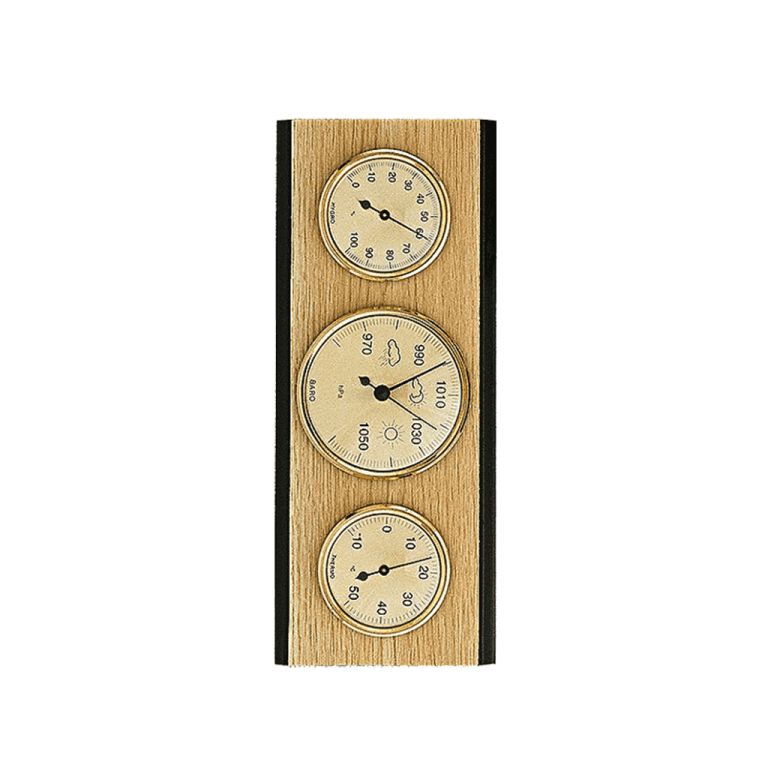
Some modern weather stations combine two or more of these functions in a single device. This can be convenient if you want to monitor several conditions without having separate instruments on display.
Traditional standalone instruments, however, can be attractive choices for people who appreciate classic design and the craftsmanship associated with weather observation.
Can These Instruments Help Predict the Weather?
Each instrument provides useful information, but none tells the complete story on its own.
A thermometer shows temperature, a barometer reveals atmospheric pressure and a hygrometer measures humidity. Observing these readings over time can help you understand your local environment and recognise certain weather-related patterns.
For example, a noticeable pressure change alongside changing humidity and temperature may suggest that weather conditions are shifting.
Nevertheless, local weather can be influenced by many factors. For reliable forecasts, especially when planning travel or outdoor activities, consult an up-to-date weather service alongside any readings from your own instruments.
How to Choose the Right Weather Instrument for Your Home
Before buying a barometer, thermometer or hygrometer, consider the following factors.
Your purpose: Decide whether you want to monitor temperature, humidity, atmospheric pressure or several conditions at once.
Display style: Choose between a traditional dial, a digital screen or a combined weather station.
Placement: Check the manufacturer’s recommendations for positioning the instrument. Outdoor sensors and indoor instruments may have different requirements.
Readability: Look for clear markings and measurements that are easy to understand.
Design: Traditional wooden cases and classic dials can complement a study or living room, while modern digital displays may suit a contemporary home.
Maintenance: Follow the manufacturer’s guidance for cleaning, calibration where applicable, battery replacement and general care.
Choosing an instrument that suits your needs will make it easier to use and enjoy over time.
Discover Weather Instruments at Timecentre
Barometers, thermometers and hygrometers offer a fascinating way to understand the environment around us. Whether you are interested in monitoring indoor conditions, observing weather patterns or adding a traditional instrument to your home, each provides a different perspective on the world outside.
Visit Timecentre at South Coast Mall, Shelly Beach, on the KwaZulu-Natal South Coast, to explore the available clocks, weather instruments and related products.
Our team can help you compare the options and find a product that suits your interests, home and lifestyle.