Today, knowing the exact time is as simple as looking at your wrist, checking a wall clock or glancing at your phone. Accurate timekeeping has become such a normal part of everyday life that it is easy to forget just how far technology has come.
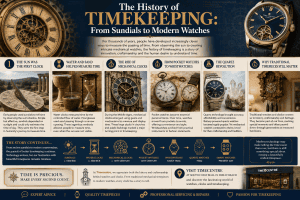
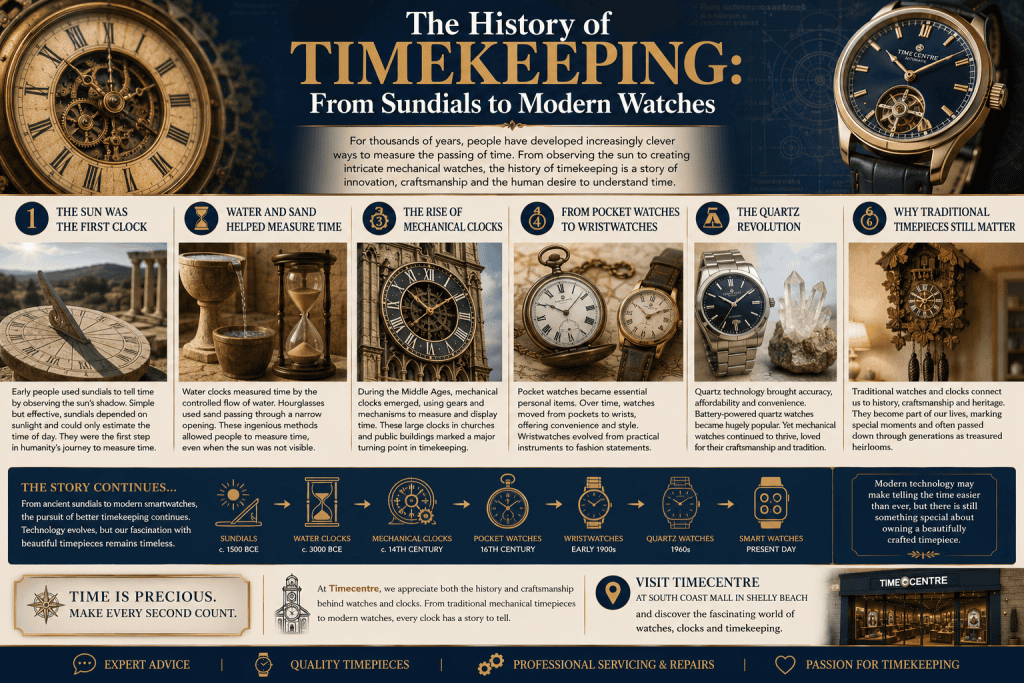
For thousands of years, people have developed increasingly clever ways to measure the passing of time. From observing the movement of the sun to creating intricate mechanical watches, the history of timekeeping is a fascinating story of innovation and craftsmanship.
The Sun Was the First Clock
Long before mechanical clocks existed, people relied on the natural world to understand the passage of time.
One of the earliest and simplest methods was the sundial. By observing the position and movement of a shadow cast by the sun, people could estimate the time of day.
Sundials were useful, but they had an obvious limitation: they depended on sunlight.
This encouraged people to develop methods of measuring time that could operate regardless of whether the sun was visible.
Water and Sand Helped Measure Time
Water clocks were another important development.
These devices measured time by allowing water to flow at a controlled rate from one container to another. Similar principles were later used in other cultures and civilisations.
Hourglasses provided another simple way to measure a period of time. Sand would gradually pass through a narrow opening from one glass chamber to another.
Neither method provided the convenience or precision of a modern watch, but they represented important steps in humanity’s understanding of time.
The Rise of Mechanical Clocks
The development of mechanical clocks represented a major turning point.
Mechanical clockmaking became increasingly sophisticated during the Middle Ages, with large clocks being installed in churches, public buildings and other important locations.
These clocks used gears and mechanical mechanisms to measure and display the passage of time.
As clockmaking developed, craftsmen became increasingly skilled at producing smaller and more accurate mechanisms.
This tradition of mechanical craftsmanship eventually helped pave the way for portable timepieces.
From Pocket Watches to Wristwatches
For centuries, portable clocks were primarily carried as pocket watches.
Pocket watches became important accessories, particularly among wealthy individuals and professionals. Their compact mechanical movements demonstrated just how far clockmaking had progressed.
Eventually, watches began to be worn on the wrist.
Wristwatches offered a practical advantage: the time could be checked quickly without having to remove a watch from a pocket.
Over time, the wristwatch evolved from a practical instrument into an important part of personal style.
The Quartz Revolution
One of the biggest changes in modern watchmaking came with the development of quartz technology.
Quartz watches use a battery and quartz crystal to regulate time. Their accuracy, affordability and convenience helped them become extremely popular.
Unlike traditional mechanical watches, quartz watches generally do not require regular winding, making them particularly convenient for everyday use.
However, the popularity of quartz did not eliminate mechanical watches. Instead, mechanical timepieces continued to appeal to people who appreciated traditional craftsmanship and the engineering involved in creating a miniature mechanical movement.
Why Traditional Watches and Clocks Still Matter
With smartphones, computers and digital devices everywhere, you might wonder why traditional watches and clocks remain popular.
The answer is partly emotional.
A beautifully crafted mechanical watch or clock represents something tangible. It has moving components, craftsmanship and history.
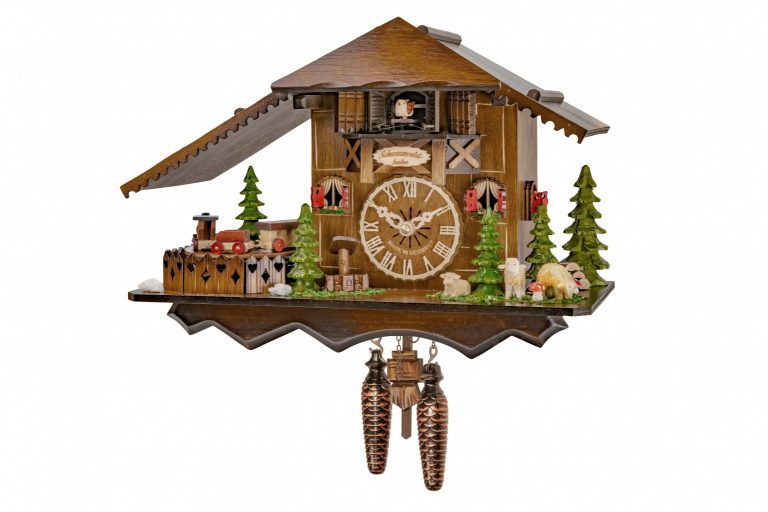
A traditional clock can become part of a family’s home. A watch can become a treasured gift or even be passed down from one generation to another.
These timepieces connect modern life with centuries of watchmaking tradition.
The Story Continues
Timekeeping technology will undoubtedly continue to evolve, but the fascination with watches and clocks shows no sign of disappearing.
Modern technology may make telling the time easier than ever, but there is still something special about owning a beautifully crafted timepiece.
At Timecentre, we appreciate both the history and craftsmanship behind watches and clocks. From traditional mechanical timepieces to modern watches, every clock has a story to tell.
Visit Timecentre at South Coast Mall in Shelly Beach and discover the fascinating world of watches, clocks and timekeeping.