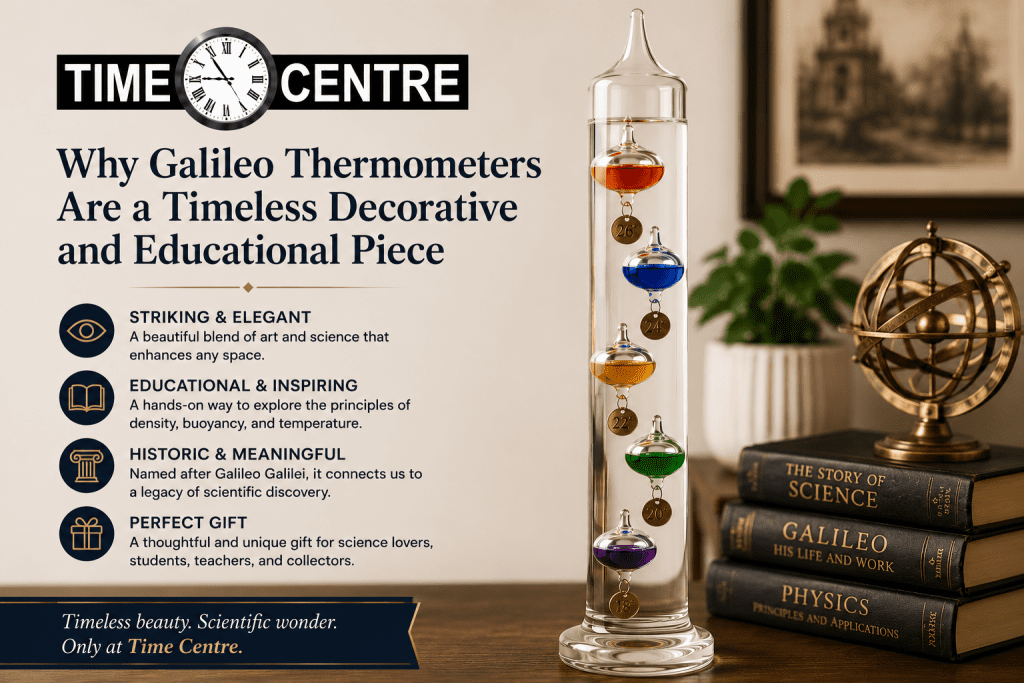
In a world filled with digital gadgets and modern technology, Galileo thermometers stand out as a unique blend of elegance, science, and timeless design. While they may not be as commonly used for precise temperature measurement today, their charm and functionality continue to make them popular in homes, offices, and educational settings.
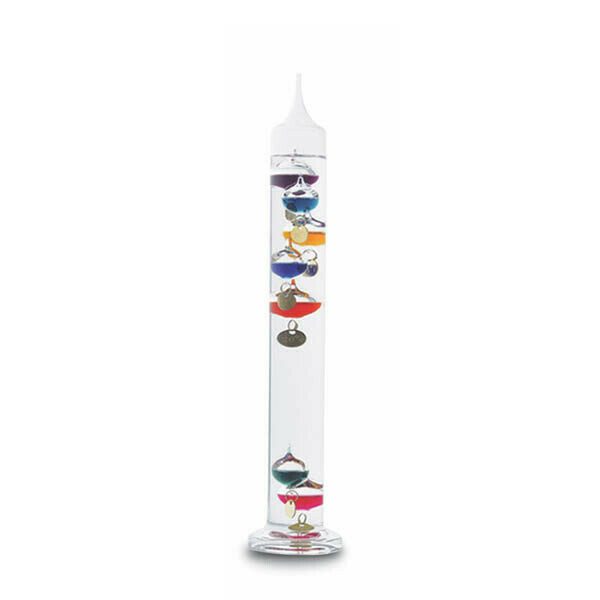
One of the main reasons Galileo thermometers remain popular is their striking visual appeal. The tall glass cylinder filled with colourful floating bulbs creates a captivating display that changes throughout the day. Unlike standard thermometers, which simply display numbers, Galileo thermometers offer a dynamic visual experience that draws attention and sparks curiosity.
These thermometers are often used as decorative pieces because they complement a wide range of interior styles. Whether placed in a modern office, a traditional living room, or a classroom, they add a touch of sophistication and intrigue. The combination of glass, colour, and gentle movement makes them both elegant and calming.
Beyond their decorative value, Galileo thermometers are also highly educational. They provide a clear and practical demonstration of scientific principles such as density and buoyancy. Watching the bulbs rise and fall as the temperature changes helps people understand how liquids behave under different conditions.
For children, Galileo thermometers can make learning science more engaging and enjoyable. Instead of reading about concepts in a textbook, they can observe these principles in action. This hands-on experience can inspire curiosity and encourage a deeper interest in science.
Another reason for their popularity is their connection to history. Named after Galileo Galilei, one of the most influential scientists of all time, these thermometers represent a significant period in scientific discovery. Owning a Galileo thermometer can feel like owning a small piece of scientific history, linking the past with the present.
Galileo thermometers are also known for their durability and simplicity. With no electronic components or batteries required, they are easy to maintain and can last for many years. As long as they are handled carefully and kept in a stable environment, they continue to function reliably.
However, it is important to note that Galileo thermometers are best suited for indoor use. They work most accurately within a specific temperature range, typically between 18°C and 26°C. Extreme temperatures can affect their performance, so they should be kept away from direct sunlight or sudden temperature changes.
Choosing a Galileo thermometer often comes down to personal preference. They are available in various sizes, colours, and designs, allowing individuals to select one that matches their décor and style. Some feature bright, vibrant colours, while others use more subtle tones for a minimalist look.
In addition to being decorative and educational, Galileo thermometers make excellent gifts. Their unique design and historical significance make them thoughtful presents for birthdays, housewarmings, or special occasions. They are especially popular among teachers, students, and science enthusiasts.
In conclusion, Galileo thermometers continue to hold a special place in modern homes because they offer more than just temperature readings. They combine beauty, history, and science into a single elegant piece. In a fast-paced digital world, they remind us of the joy of discovery and the beauty of simple scientific principles.
Whether admired for their design, used for educational purposes, or appreciated for their historical significance, Galileo thermometers remain timeless objects that continue to inspire curiosity and wonder.