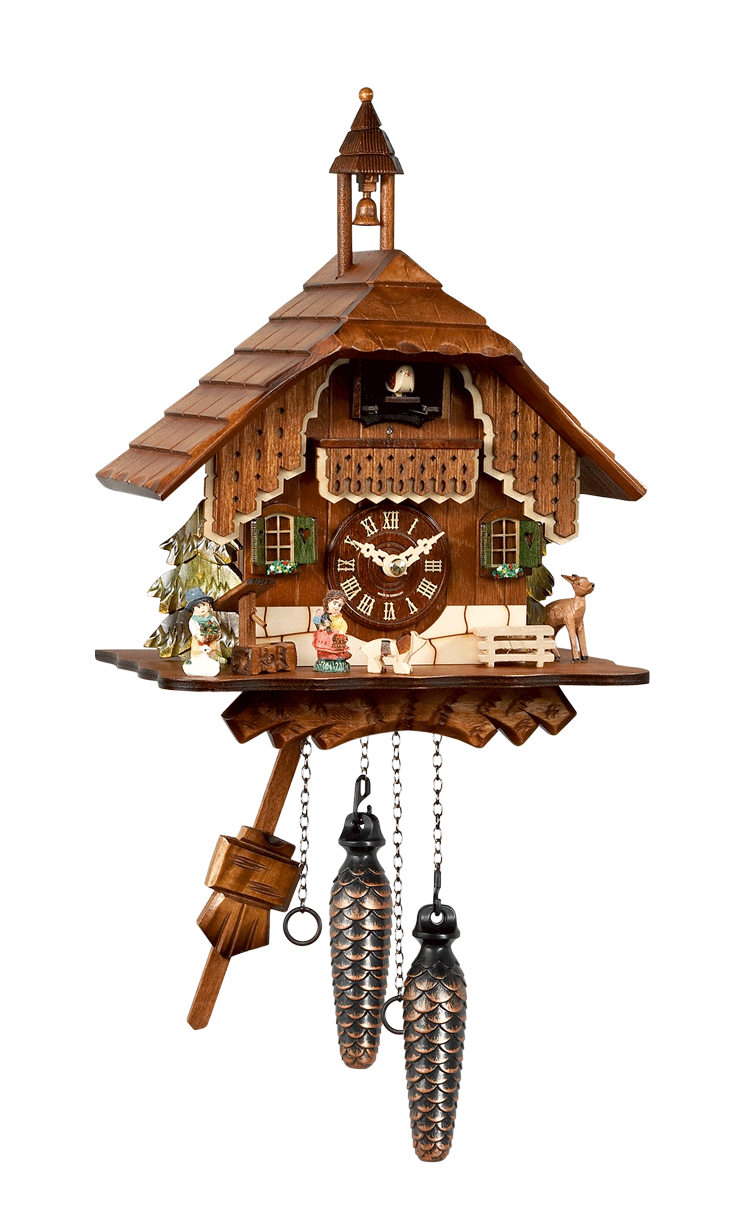
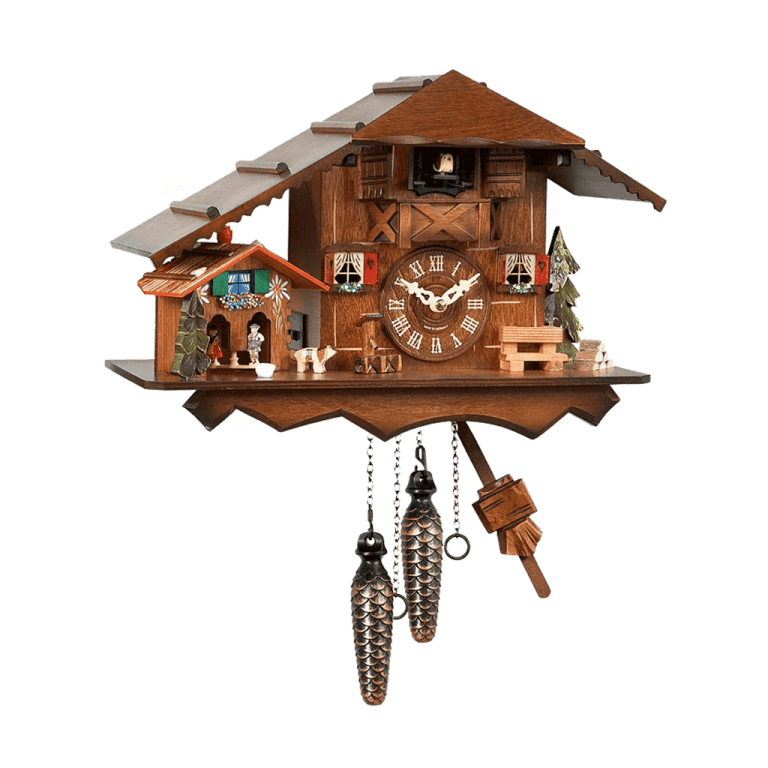
A weather house clock is a unique type of decorative timepiece that combines traditional clock functionality with a simple weather prediction mechanism. Often charming and whimsical, these clocks have a rich history tied to folk art and European craftsmanship, particularly in Germany. The weather house clock has been a beloved household item for centuries, serving both practical and decorative purposes.
The origins of the weather house can be traced back to the Black Forest region of Germany in the 18th and 19th centuries. This area was famous for its skilled clockmakers and intricate woodcraft. The weather house is typically a small wooden house with two figurines—one representing a man and the other a woman—standing in the doorways. The figurines are connected to a hygrometer, which measures humidity in the air. When the air is dry, indicating sunny weather, one figure comes out of the house; when the air is humid, indicating rain or stormy weather, the other figure appears. This simple mechanical design allowed households to predict weather conditions in a charming and visual way, long before modern meteorology.
Weather houses became especially popular as decorative items in the 19th century. They were often hand-carved from wood and painted with bright colors, featuring traditional motifs like flowers, trees, or alpine designs. Many weather houses were designed as souvenirs for tourists visiting the Black Forest region, making them both functional and collectible. Their combination of folk art and practical utility appealed to a wide audience, and they were often displayed prominently in kitchens, parlors, or entryways.
In the 20th century, weather house clocks continued to evolve. While some incorporated basic clock mechanisms, others remained purely decorative with the weather-predicting figurines. Advances in materials and production allowed for more intricate designs, and the weather house became a popular gift item as well as a collector’s piece. Even today, weather house clocks are appreciated for their nostalgic charm, mechanical simplicity, and connection to traditional European craftsmanship.
In conclusion, the weather house clock has a long and interesting history, combining folk art, mechanical ingenuity, and practical weather prediction. Originating in Germany’s Black Forest region, it has delighted households for centuries with its charming figurines and visual display of weather conditions. Beyond its functionality, the weather house clock remains a symbol of craftsmanship, tradition, and timeless decorative appeal.