Have you ever seen a little wooden house with two figures that move in and out depending on the weather? Known as a traditional weather house, this charming device combines folk tradition, simple mechanics and decorative craftsmanship.
Often associated with German-speaking regions of Europe, weather houses have fascinated people for generations. Their small moving figures make them both a conversation piece and a delightful way to observe traditional weather folklore.
At Timecentre in South Coast Mall, Shelly Beach, we appreciate timepieces and traditional instruments that bring history, craftsmanship and character into everyday life.
What Is a Traditional Weather House?
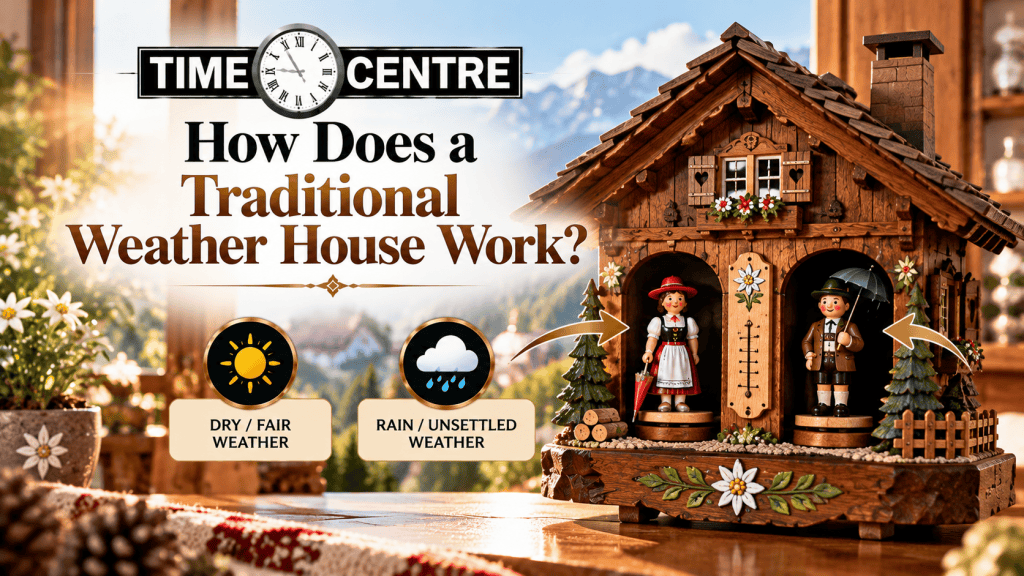
A traditional weather house is a small decorative structure designed to indicate changes in weather conditions through the movement of two figures.
Many classic designs feature a woman and a man standing on a small platform beneath a roof. One figure is traditionally associated with dry or fair weather, while the other represents wet or unsettled conditions.
The figures move in and out of the house as the weather changes. Although the design may look simple, the mechanism inside is what makes this little instrument so interesting.
Weather houses are often made from wood and may feature painted details, decorative balconies, traditional clothing and other elements inspired by Alpine or German folk design.
How Does a Weather House Work?
The traditional weather house generally uses a humidity-sensitive mechanism rather than electronic sensors.
Many models contain a coiled strand of catgut or another moisture-responsive material. As humidity changes, the material absorbs or releases moisture and changes length or tension.
This movement operates a small mechanism that turns the platform holding the figures, allowing one figure to move outside while the other moves inside.
The result is a charming mechanical display that responds to changes in atmospheric moisture.
The exact mechanism can vary between designs, so it is worth checking the construction of a particular weather house if you want to understand how it operates.
What Do the Two Figures Mean?
In many traditional weather houses, the figures represent two different weather conditions.
The Fair-Weather Figure
One figure is traditionally linked with dry or sunny weather. When the mechanism moves this figure outside, the house indicates conditions associated with fair weather.
The Rain Figure
The second figure represents rain or unsettled weather. When this figure moves outside, the house suggests that damp or rainy conditions may be approaching.
The arrangement varies between manufacturers, so it is best to follow the instructions supplied with the specific model.
An important point: a traditional weather house is not a modern forecasting instrument. Its movements respond mainly to humidity-related changes, which can offer an indication of atmospheric conditions but cannot reliably predict every weather event.
For important decisions involving travel or outdoor safety, use an up-to-date local weather forecast.
The History Behind Weather Houses
Traditional weather houses are closely associated with the Black Forest region of Germany and other parts of Central Europe, where wooden crafts and mechanical traditions have long been valued.
Their appeal lies in the combination of decorative design and simple engineering. Instead of displaying measurements on a screen, a weather house communicates through movement, giving it a distinctive personality.
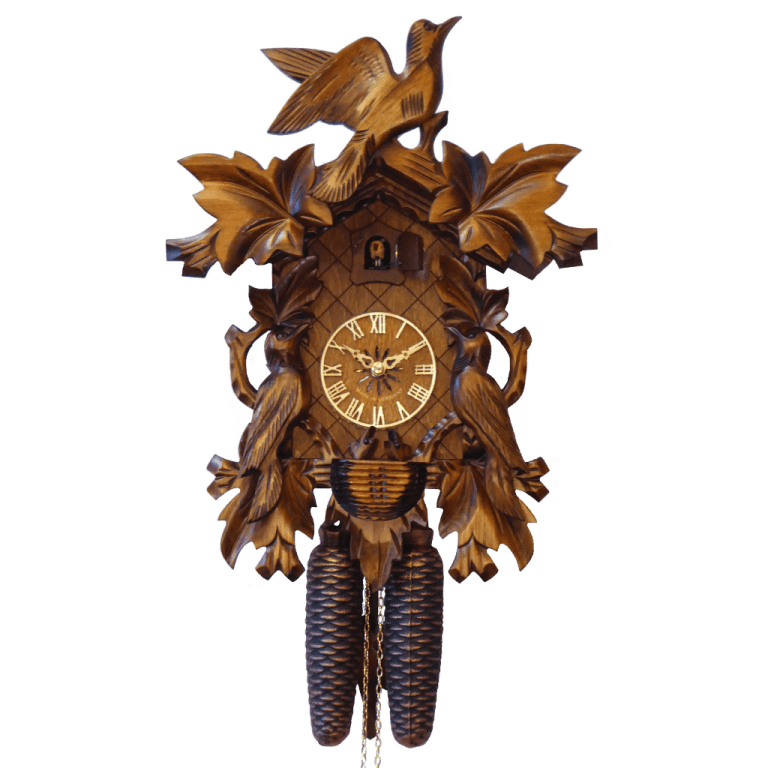
Like cuckoo clocks and other traditional wooden crafts, weather houses reflect a style of craftsmanship that connects everyday objects with regional history and cultural traditions.
Today, they are appreciated by collectors, lovers of traditional décor and people who enjoy unusual gifts with a story behind them.
Why Make a Weather House Part of Your Home?
A weather house can be a wonderful addition to a shelf, desk, mantelpiece or display cabinet. Its compact size makes it suitable for spaces where a larger clock or weather station may not fit.
Here are a few reasons people enjoy them:
- Traditional character: Wooden construction and decorative details bring warmth to a room.
- A fascinating mechanism: Watching the figures move introduces a simple lesson in humidity and mechanical movement.
- A conversation starter: The unusual design often attracts attention from visitors.
- A thoughtful gift: A weather house can suit someone who enjoys traditional crafts, European heritage or distinctive home accessories.
- A collectible item: Different designs and finishes allow enthusiasts to build a collection of traditional weather instruments.
How to Care for a Traditional Weather House
To keep your weather house looking its best, place it in a stable indoor environment and follow the manufacturer’s care instructions.
Avoid exposing it to direct sunlight, excessive heat, damp conditions or sudden environmental changes. Do not force the figures to move or attempt to adjust the internal mechanism unnecessarily.
If the figures stop moving as expected, remember that the mechanism responds to environmental conditions and may not react immediately. Check the instructions before attempting any adjustments.
Discover Traditional Weather Instruments at Timecentre
A traditional weather house is more than a decorative ornament. It is a fascinating example of how craftsmanship and simple mechanics can turn an everyday observation into something memorable.
Whether you appreciate traditional German designs, enjoy collecting unusual objects or are looking for a distinctive gift, a weather house offers a charming connection to the history of weather observation.
Visit Timecentre at South Coast Mall, Shelly Beach, on the KwaZulu-Natal South Coast, to explore our range of clocks and weather-related products.