Have you ever wondered what the weather will be like before planning a day outdoors, heading to the beach or working in your garden? A weather station can help you understand the conditions around you and make more informed decisions throughout the day.
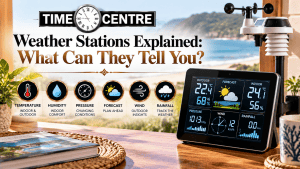
Modern weather stations combine useful measurements with convenient displays, allowing you to check information such as temperature, humidity, atmospheric pressure and, on some models, weather forecasts.
At Timecentre in South Coast Mall, Shelly Beach, you can explore timepieces and weather-related products designed to bring practical information and everyday convenience into your home.
What Is a Weather Station?
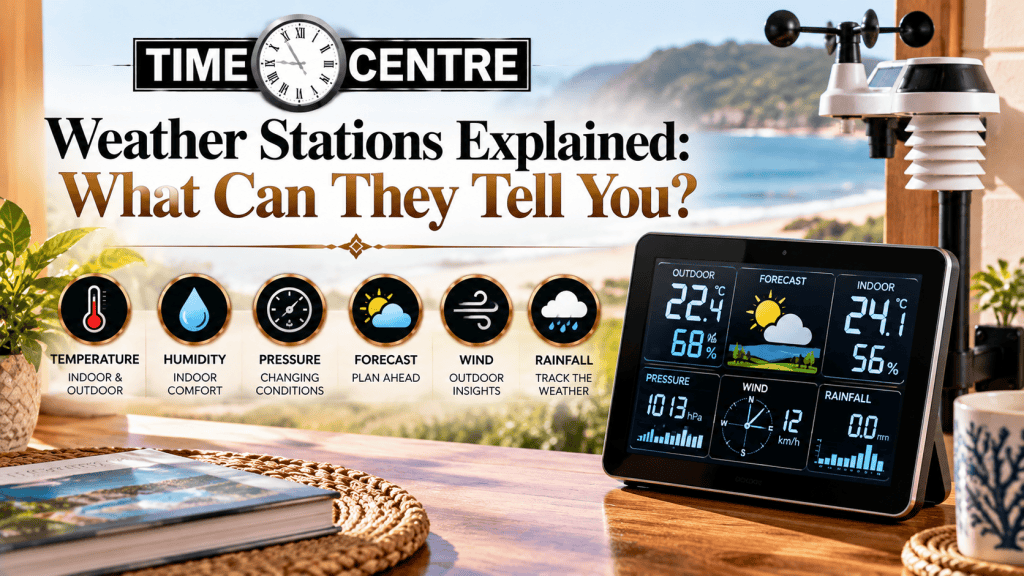
A weather station is a device that measures and displays information about the surrounding environment. Depending on the model, it may use built-in sensors or separate outdoor sensors to collect readings and show them on a digital display.
Basic models may provide indoor and outdoor temperatures, while more advanced weather stations can measure several additional conditions and display forecast indicators.
Some models are wireless, allowing an outdoor sensor to send information to an indoor display without requiring a cable between the two units.
The features available vary from one product to another, so it is worth considering which measurements will be most useful to you before choosing a weather station.
What Can a Weather Station Tell You?
1. Indoor and Outdoor Temperature
One of the most useful features of a weather station is its ability to display temperature readings. Depending on the model, you may be able to compare the temperature inside your home with the conditions outdoors.
This information can help you decide what to wear, plan outdoor activities or understand how temperatures change throughout the day.
For accurate readings, position outdoor sensors according to the manufacturer’s instructions, away from direct sunlight and other sources of artificial heat.
2. Humidity Levels
Humidity describes the amount of water vapour in the air. Many weather stations include a hygrometer, which measures relative humidity.
Indoor humidity readings can help you understand whether the air inside your home is particularly dry or humid. This can be useful when considering ventilation and general indoor comfort.
Remember that a weather station provides readings rather than automatically correcting humidity levels. Any action you take should depend on the conditions and your particular environment.
3. Atmospheric Pressure
Some weather stations measure atmospheric pressure, also known as barometric pressure.
Changes in atmospheric pressure can provide clues about changing weather patterns. A falling pressure reading may be associated with unsettled weather, while rising pressure can sometimes indicate improving conditions.
However, pressure readings alone cannot guarantee what the weather will do. Forecast information and local weather reports provide additional context.
4. Weather Forecast Indicators
Certain digital weather stations display symbols such as sunshine, clouds or rain. These icons usually represent an estimated forecast based on the device’s measurements and internal forecasting method.
They offer a convenient overview, but the accuracy can vary according to the model, its location and the weather conditions.
If you are planning a long drive, a boating trip or an outdoor event, consult an up-to-date local weather forecast as well.
5. Additional Measurements
Depending on the model, a more advanced weather station may provide further information, including wind speed, rainfall or dew point.
Not every weather station offers these functions. Check the product specifications carefully if you need particular measurements for gardening, outdoor hobbies or other activities.
Why Have a Weather Station at Home?
A home weather station makes environmental information easy to access without having to open a weather app every time you want to check the conditions.
It can be useful for families planning outdoor activities, gardeners monitoring temperature and humidity, and anyone who enjoys keeping track of changing weather patterns.
For homes along the KwaZulu-Natal South Coast, where coastal conditions can change, checking local weather information can be particularly helpful when planning beach visits, gardening or other outdoor activities.
A weather station can also make a thoughtful gift for someone who enjoys technology, gardening or learning more about the natural world.
How to Choose the Right Weather Station
Before purchasing a weather station, consider these important points:
- Measurements: Decide whether you need temperature and humidity only, or additional readings such as pressure and wind speed.
- Display: Choose a screen that is easy to read from your preferred location.
- Wireless sensors: Check whether the model includes an outdoor sensor and whether its range suits your property.
- Power source: Find out whether it uses batteries, a power adapter or a combination of both.
- Forecast features: Check how the forecast indicators work and remember that they are estimates.
- Placement: Make sure you have a suitable location for any outdoor sensors, following the manufacturer’s instructions.
Choosing a model that meets your everyday needs is often more useful than paying for features you are unlikely to use.
Discover Weather Stations at Timecentre
A weather station is a practical addition to the home, combining useful environmental readings with modern technology. Whether you want to monitor indoor and outdoor temperatures, check humidity or explore more advanced weather measurements, there are different models to suit different requirements.
Visit Timecentre at South Coast Mall, Shelly Beach, KwaZulu-Natal, to explore the available weather stations and related products. Our team can help you compare the options and find a product that suits your needs.