Galileo thermometers are among the most visually striking and scientifically intriguing instruments ever created. Named after the famous Italian scientist Galileo Galilei, these thermometers combine beauty, physics, and history into a single elegant device. While they are often admired as decorative pieces today, Galileo thermometers are also fully functional instruments that measure temperature using fundamental scientific principles.
The origins of the Galileo thermometer can be traced back to the early 17th century, when Galileo Galilei began studying the properties of liquids and how they respond to changes in temperature. Although Galileo himself did not invent the thermometer as we know it today, his discoveries about density and buoyancy laid the groundwork for this unique device.
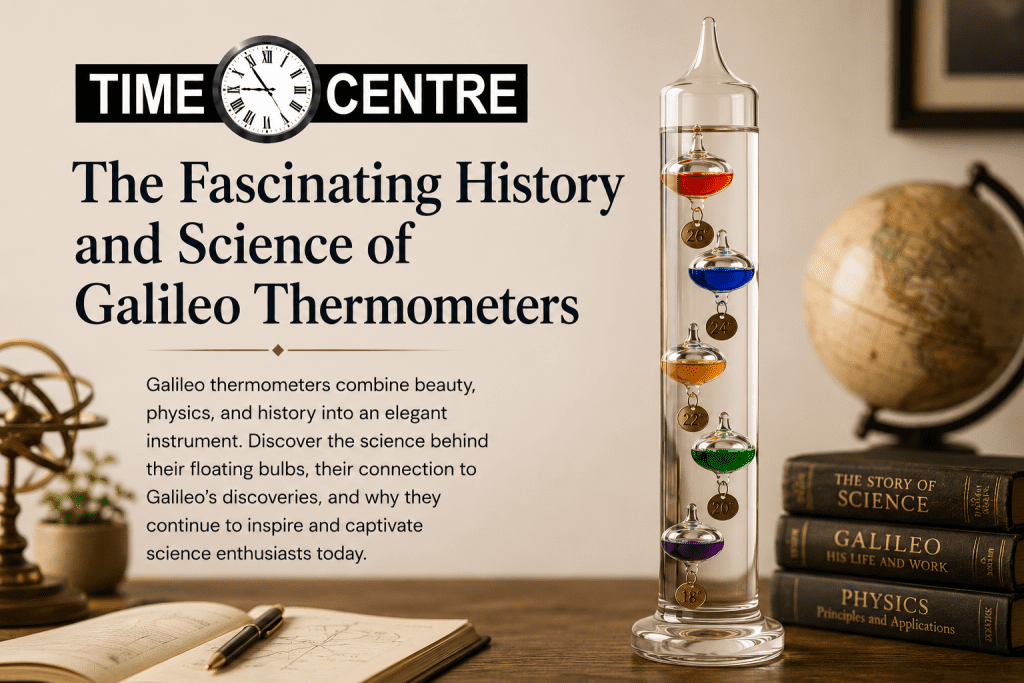
At the heart of a Galileo thermometer is the principle of buoyancy, which is closely related to density. The thermometer consists of a sealed glass cylinder filled with a clear liquid, usually alcohol or mineral oil. Suspended within this liquid are several glass bulbs, each containing a coloured liquid and a small metal tag indicating a specific temperature.
Each bulb is carefully calibrated to have a slightly different density. As the temperature changes, the density of the surrounding liquid also changes. When the temperature rises, the liquid becomes less dense, causing some bulbs to sink. When the temperature drops, the liquid becomes denser, allowing certain bulbs to float.
Reading a Galileo thermometer is simple once you understand how it works. The temperature is indicated by the lowest floating bulb in the cylinder. For example, if the bulbs marked 18°C and 20°C are floating, but the 22°C bulb has sunk, the temperature is approximately 20°C. This elegant method of measuring temperature makes the Galileo thermometer both educational and fascinating to observe.
One of the most appealing features of Galileo thermometers is their aesthetic beauty. The colourful bulbs appear to float effortlessly inside the glass cylinder, creating a dynamic and ever-changing display. The gentle movement of the bulbs as temperatures shift adds a sense of calm and curiosity, making it a perfect decorative item for homes, offices, and classrooms.
Beyond their visual appeal, Galileo thermometers serve as excellent educational tools. They provide a hands-on way to understand scientific concepts such as density, buoyancy, and temperature variation. For students and science enthusiasts, they offer a clear demonstration of how physical properties interact in real-world conditions.
Galileo thermometers are also valued for their craftsmanship. Each bulb must be precisely weighted to ensure accurate temperature readings. This level of precision requires careful manufacturing and attention to detail, reflecting the blend of art and science that defines these instruments.
Although modern digital thermometers offer quicker and more precise readings, Galileo thermometers remain popular for their charm and uniqueness. They remind us of a time when scientific instruments were not only functional but also beautifully designed.
In today’s world, Galileo thermometers are often used as decorative pieces that add elegance and interest to any space. Whether placed on a desk, shelf, or coffee table, they become a conversation starter and a symbol of scientific curiosity.
Ultimately, the Galileo thermometer represents the perfect balance between science and art. It captures the spirit of discovery that defined Galileo’s work while offering a timeless and visually captivating way to measure temperature. Its enduring appeal lies in its ability to educate, inspire, and beautify, making it a truly remarkable invention